Understanding Cosmetic Stability Testing
Why stability testing matters, what it measures and how it protects your product from the lab bench to the end consumer.
- Written by
- MAXCOS Technical Team · Formulation, Quality & Regulatory
- Published
- Publisher
- MAXCOS Manufacturing Sdn Bhd
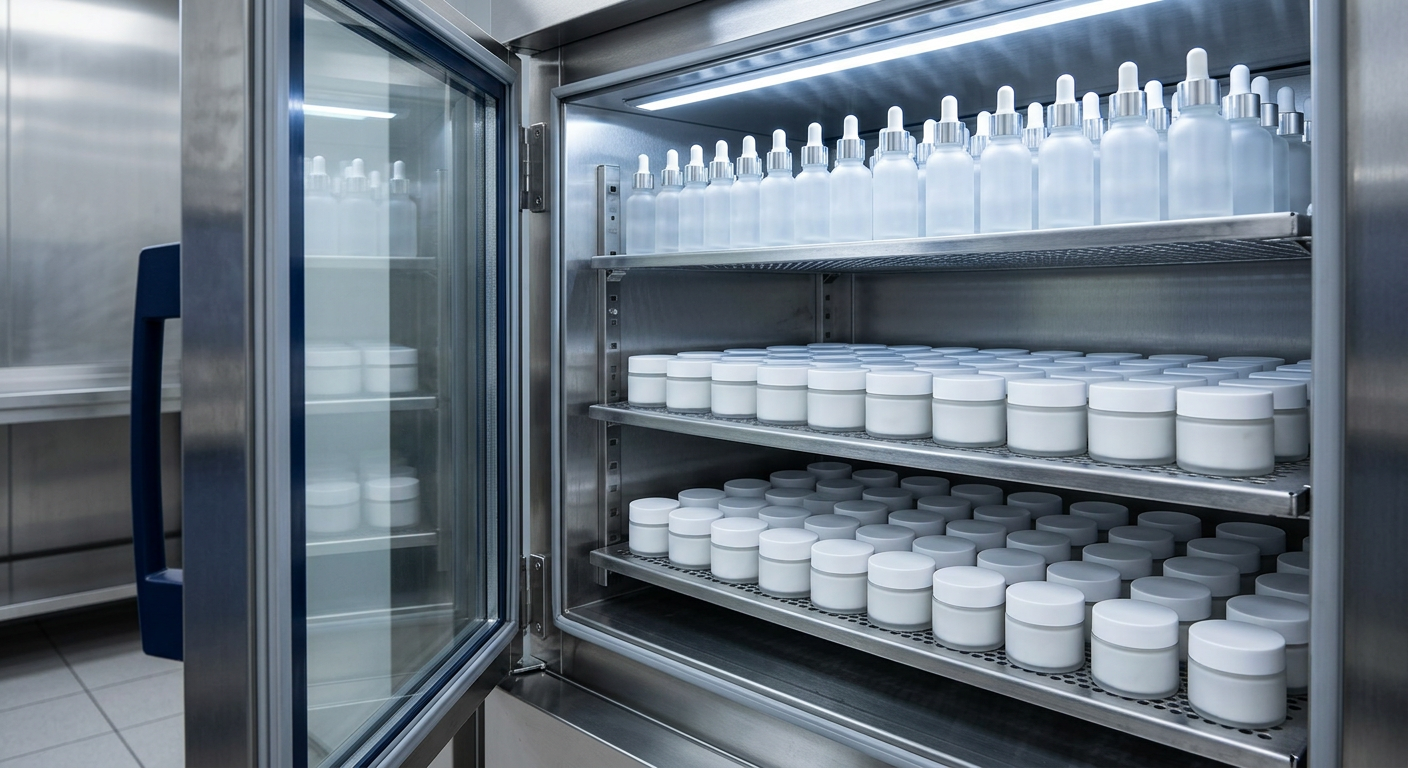
A formula that looks perfect on day one can separate, discolour or lose fragrance after a few months on a shelf. Stability testing is how manufacturers find these problems before consumers do.
What stability testing evaluates
Samples of the finished formula are stored under controlled conditions and checked at defined intervals. Typical parameters include:
- Appearance, colour and odour
- pH and viscosity
- Phase separation, crystallisation or syneresis
- Compatibility between the formula and its final packaging
Accelerated versus real-time conditions
Accelerated studies use elevated temperatures and freeze-thaw cycles to stress the formula and reveal weaknesses early. Real-time studies at ambient conditions confirm how the product actually behaves over its intended shelf life. Both are useful, and neither replaces the other.

Why packaging matters
Ingredients can interact with plastics, liners and pumps. Testing the formula in its final packaging helps identify issues such as weight loss, discolouration of components or changes in dispensing performance.
Stability is designed into a formula from the start, then confirmed by testing.
If you are planning a new launch, talk to our team about building stability planning into your development timeline.