Formulation6 min read
Emulsions Explained: The Science Behind Creams and Lotions
How oil and water are brought together into stable, elegant textures, and why processing matters as much as the formula.
- Written by
- MAXCOS Technical Team · Formulation, Quality & Regulatory
- Published
- Publisher
- MAXCOS Manufacturing Sdn Bhd
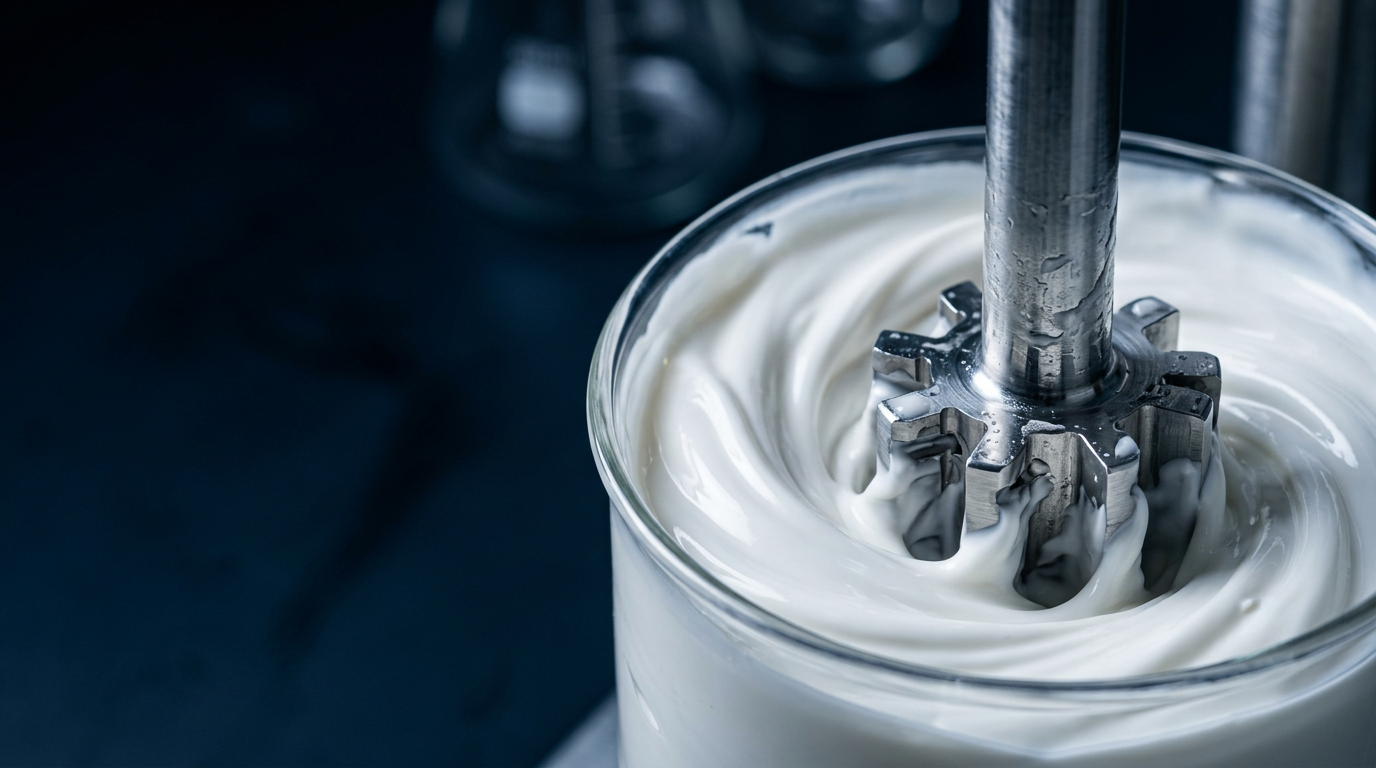
Most creams and lotions are emulsions: tiny droplets of one phase dispersed in another. Getting them right depends on both the ingredients and the way they are processed.
Oil-in-water and water-in-oil
Oil-in-water emulsions tend to feel lighter and are common in daily moisturisers. Water-in-oil emulsions often feel richer and more occlusive. The emulsifier system determines which type forms.
Why processing matters
- Phase temperatures during addition
- Homogenisation speed and duration
- Cooling rate and the stage at which heat-sensitive ingredients are added
Small changes to these parameters can affect texture, droplet size and long-term stability, which is why scale-up from lab to production is carefully controlled.